






























































ভূমিকা:
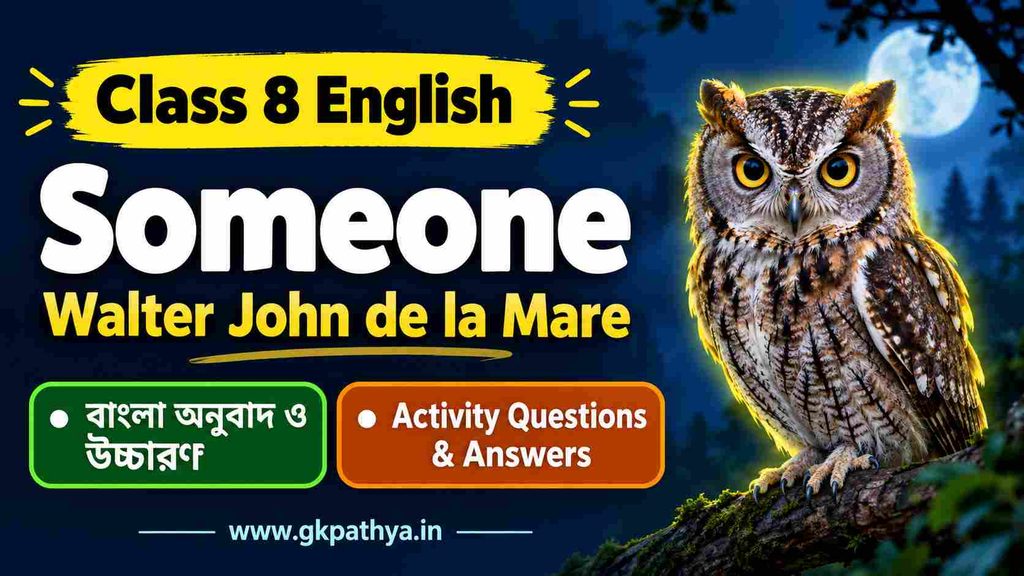
ওয়েস্ট বেঙ্গল বোর্ড অব সেকন্ডারি এডুকেশন (WBBSE) এর অষ্টম শ্রেণীর (Class 8) ইংরেজি পাঠ্যবই Blossoms-এর একটি অন্যতম সুন্দর ও রহস্যময় কবিতা হলো অল্টার জন দ্য লা মেয়ার (Walter John de la Mare)-এর লেখা “Someone”। নিস্তব্ধ, অন্ধকার এক রাতে হঠাৎ দরজায় কেউ একজন টোকা বা কড়া নাড়ার মধ্য দিয়ে কবিতাটির সূত্রপাত হয়। প্রকৃতির নিঝুম পরিবেশ, বিটল্ (গুবরে পোকা), পেঁচা ও ঝিঁঝিঁ পোকার ডাক এবং কবিতার ছন্দের রহস্যময় আবহ ছাত্র-ছাত্রীদের মনে এক অদ্ভুত কৌতূহল ও আনন্দ তৈরি করে।
পরীক্ষায় ভালো নম্বর পাওয়ার জন্য এবং কবিতাটি ভালোভাবে বোঝার জন্য এর প্রতিটি লাইনের বাংলা অনুবাদ (Bengali Meaning), ইংরেজি উচ্চারণ, গুরুত্বপূর্ণ শব্দার্থ (Word Notes) এবং Activity-র প্রশ্ন ও উত্তর (Questions and Answers) সঠিকভাবে অনুশীলন করা অত্যন্ত জরুরি।
আজকের এই আর্টিকেলে আমরা Class 8 English Someone কবিতাটির সম্পূর্ণ বাংলা মানে, উচ্চারণ, সহজ ব্যাখ্যা এবং ব্যাকরণসহ (Grammar) সমস্ত Activity-র নির্ভুল সমাধান সহজ ভাষায় আলোচনা করেছি। আপনি যদি অষ্টম শ্রেণীর ছাত্র-ছাত্রী বা শিক্ষক-শিক্ষিকা হয়ে থাকেন, তবে এই পোস্টটি আপনার প্রস্তুতির জন্য একটি নির্ভরযোগ্য ও নিখুঁত নির্দেশিকা (Complete Guide) হিসেবে কাজ করবে।
কবি পরিচিতি (About the Poet)
Walter John de la Mare (25 April 1873 – 22 June 1956) was an English poet, short story writer and novelist. He is probably best remembered for his works for children and for his poem “The Listeners”. His career as a writer started from about 1895 and he continued to publish to the end of his life. In his poems de la Mare has described the English sea and coast, the secret and hidden world of nature.
- বাংলা অর্থ: অল্টার জন দ্য লা মেয়ার (২৫শে এপ্রিল ১৮৭৩ – ২২শে জুন ১৯৫৬) ছিলেন একজন ইংরেজ কবি, ছোটগল্পকার ও ঔপন্যাসিক। তিনি সম্ভবত শিশুদের জন্য তাঁর সাহিত্যকর্ম এবং তাঁর “দ্য লিসনার্স” কবিতার জন্য সবচেয়ে বেশি স্মরণীয়। লেখক হিসেবে তাঁর কর্মজীবন শুরু হয়েছিল প্রায় ১৮৯৫ সাল থেকে এবং তিনি তাঁর জীবনের শেষ দিন পর্যন্ত লেখা প্রকাশ করে গেছেন। তাঁর কবিতায় দ্য লা মেয়ার ইংল্যান্ডের সমুদ্র ও উপকূল এবং প্রকৃতির রহস্যময় ও গোপন জগতের বর্ণনা দিয়েছেন।
Someone কবিতাটির উচ্চারণ ও বাংলা অর্থ (Poem: Line by Line)
Someone came knocking
- উচ্চারণ: সামওয়ান কেম নকিং
- বাংলা অর্থ: কেউ একজন টোকা দিচ্ছিল / ধাক্কা দিচ্ছিল
At my wee, small door;
- উচ্চারণ: অ্যাট মাই উই, স্মল ডোর;
- বাংলা অর্থ: আমার অতি ক্ষুদ্র, ছোট দরজায়;
Someone came knocking;
- উচ্চারণ: সামওয়ান কেম নকিং;
- বাংলা অর্থ: কেউ একজন টোকা দিচ্ছিল;
I’m sure-sure-sure;
- উচ্চারণ: আই ‘ম শিওর-শিওর-শিওর;
- বাংলা অর্থ: আমি একদম নিশ্চিত-নিশ্চিত-নিশ্চিত;
I listened, I opened,
- উচ্চারণ: আই লিসনড্, আই ওপেনড্,
- বাংলা অর্থ: আমি শুনলাম, আমি খুললাম,
I looked to left and right,
- উচ্চারণ: আই লুকড্ টু লেফট অ্যান্ড রাইট,
- বাংলা অর্থ: আমি বাঁয়ে ও ডানে তাকালাম,
But nought there was a stirring
- উচ্চারণ: বাট নট্ দেয়ার ওয়াজ আ স্টারিং
- বাংলা অর্থ: কিন্তু সেখানে কোনো সাড়াশব্দ / আলোড়ন ছিল না
In the still, dark night;
- উচ্চারণ: ইন দ্য স্টিল, ডার্ক নাইট;
- বাংলা অর্থ: সেই নিস্তব্ধ, অন্ধকার রাতে;
Only the busy beetle
- উচ্চারণ: অনলি দ্য বিজি বিটল্
- বাংলা অর্থ: শুধু সেই ব্যস্ত গুবরে পোকাটি
Tap-tapping in the wall,
- উচ্চারণ: ট্যাপ-ট্যাপিং ইন দ্য ওয়াল,
- বাংলা অর্থ: দেওয়ালের মধ্যে ঠকঠক শব্দ করছিল,
Only from the forest
- উচ্চারণ: অনলি ফ্রম দ্য ফরেস্ট
- বাংলা অর্থ: শুধু গভীর বন থেকে
The screech-owl’s call,
- উচ্চারণ: দ্য স্ক্রীচ-আউলস কল,
- বাংলা অর্থ: তীক্ষ্ণ ডাকের পেঁচার আওয়াজ,
Only the cricket whistling
- উচ্চারণ: অনলি দ্য ক্রিকেট হুইসলিং
- বাংলা অর্থ: শুধু ঝিঁঝিঁ পোকার শীশ দেওয়ার শব্দ
While the dewdrops fall,
- উচ্চারণ: হোয়াইল দ্য ডিউড্রপস ফল,
- বাংলা অর্থ: যখন শিশিরবিন্দু ঝরে পড়ছিল,
So I know not who came knocking,
- উচ্চারণ: সো আই নো নট হু কেম নকিং,
- বাংলা অর্থ: তাই আমি জানতে পারলাম না কে এসে টোকা দিয়েছিল,
At all, at all, at all.
- উচ্চারণ: অ্যাট অল, অ্যাট অল, অ্যাট অল।
- বাংলা অর্থ: একদমই না, একদমই না, একদমই না।
আরো পড়ুন: Class 8 History Chapter 8 — সাম্প্রদায়িকতা থেকে দেশভাগ:
Someone কবিতায় গুরুত্বপূর্ণ শব্দ ও তাদের উচ্চারণ (Word Meaning & Pronunciation)
- Knocking (নকিং): টোকা দেওয়া / দরজায় আওয়াজ করা
- Wee (উই): অতি ক্ষুদ্র / খুব ছোট
- Sure (শিওর): নিশ্চিত
- Nought (নট্): কিছুই না (Nothing)
- Stirring (স্টারিং): নড়াচড়া বা আলোড়ন
- Still (স্টীল): শান্ত বা নিস্তব্ধ
- Beetle (বিটল্): গুবরে পোকা
- Screech-owl (স্ক্রীচ-আউল): তীক্ষ্ণ গলায় ডাকা পেঁচা
- Cricket (ক্রিকেট): ঝিঁঝিঁ পোকা
- Whistling (হুইসলিং): শীশ দেওয়া বা শিস বাজানো
- Dewdrops (ডিউড্রপস): শিশিরবিন্দু
Someone কবিতার প্রশ্ন ও উত্তর (Questions and Answers)
Someone: Activity 1: Tick the correct alternative
- The door was —
- (a) big
- (b) small
- (c) wide
- Answer: (b) small
- The poet looked —
- (a) up and down
- (b) back and forth
- (c) to left and right
- Answer: (c) to left and right
- The busy beetle was tap-tapping in the —
- (a) wall
- (b) door
- (c) window
- Answer: (a) wall
- The cricket was —
- (a) singing
- (b) whistling
- (c) chirping
- Answer: (b) whistling
Someone: Activity 2: Complete the following sentences with information from the text
- Someone came knocking at _______________________.
- Answer: the poet’s wee, small door.
- There was no stirring in _______________________.
- Answer: the still, dark night.
- The screech-owl’s call was heard from _______________________.
- Answer: the forest.
- The poet does not know who _______________________.
- Answer: came knocking at his door at all.
Someone: Activity 3: Answer the following questions (Short Answer Type)
Q1: How was the night described in the poem?
(কবিতায় রাতটির বর্ণনা কীভাবে দেওয়া হয়েছে?)
Ans: The night was still, dark, and quiet with the falling of dewdrops.
(রাতটি ছিল নিস্তব্ধ, অন্ধকার এবং শিশির পতনে ভরা শান্ত।)
Q2: What sounds did the poet hear during the night?
(রাতে কবি কী কী শব্দ শুনতে পেয়েছিলেন?)
Ans: The poet heard the tap-tapping of the busy beetle in the wall, the screech-owl’s call from the forest, and the whistling of the cricket.
(কবি ওয়ালের ভিতর গুবরে পোকার ঠকঠক শব্দ, বন থেকে পেঁচার ডাক এবং ঝিঁঝিঁ পোকার শীশ দেওয়ার শব্দ শুনতে পেয়েছিলেন।)
Q3: Why was the poet sure that someone came knocking?
(কবি কেন নিশ্চিত ছিলেন যে কেউ একজন দরজায় টোকা দিচ্ছিল?)
Ans: The poet was sure because he clearly heard the sound of knocking at his wee, small door.
(কবি নিশ্চিত ছিলেন কারণ তিনি তাঁর ছোট দরজায় টোকা দেওয়ার শব্দ স্পষ্ট শুনতে পেয়েছিলেন।)
Someone: Activity 4
Fill in the following chart with information from the text:
| Who | Did What |
| (i) Someone | knocked at the poet’s door |
| (ii) Beetle | tap-tapped on the wall |
| (iii) Owl | screeched |
| (iv) Cricket | whistled |
আরো পড়ুন: Articles: A, An, The ব্যবহারের সহজ নিয়ম ও Learn Rules Easily with 10 Masterful Practice Sets.
Someone: Activity 5
Answer the following questions:
(a) What did the poet do after he heard the knocking on the door?
(উচ্চারণ: হোয়াট ডিড দ্য পোয়েট ডু আফটার হি হার্ড দ্য নকিং অন দ্য ডোর?)
(অর্থ: দরজায় কড়া নাড়ার শব্দ শোনার পর কবি কী করেছিলেন?)
- Ans: The poet listened, opened the door, and looked left and right.
(উচ্চারণ: দ্য পোয়েট লিসেন্ড, ওপেন্ড দ্য ডোর, অ্যান্ড লুকড লেফট অ্যান্ড রাইট।)
(অর্থ: কবি প্রথমে শুনলেন, তারপর দরজা খুললেন এবং ডানে-বামে তাকালেন।)
(b) What was the night like?
(উচ্চারণ: হোয়াট ওয়াজ দ্য নাইট লাইক?)
(অর্থ: রাতটি কেমন ছিল?)
- Ans: The night was still and dark.
(উচ্চারণ: দ্য নাইট ওয়াজ স্টিল অ্যান্ড ডার্ক।)
(অর্থ: রাতটি ছিল নিস্তব্ধ ও অন্ধকার।)
(c) Name the insect mentioned in the poem.
(উচ্চারণ: নেম দ্য ইনসেক্ট মেনশন্ড ইন দ্য পোয়েম।)
(অর্থ: কবিতায় উল্লেখ করা পোকাটির নাম বলো।)
- Ans: Beetle and cricket are the insects mentioned in the poem.
(উচ্চারণ: বিটল অ্যান্ড ক্রিকেট আর দ্য ইনসেক্টস মেনশন্ড ইন দ্য পোয়েম।)
(অর্থ: বিটল এবং ক্রিকেট—এই দুইটি পোকা কবিতায় উল্লেখ করা হয়েছে।)
(d) Why does the poet use the expression ‘at all’ thrice in the last line of the poem?
(উচ্চারণ: হোয়াই ডাজ দ্য পোয়েট ইউজ দ্য এক্সপ্রেশন ‘অ্যাট অল’ থ্রাইস ইন দ্য লাস্ট লাইন অফ দ্য পোয়েম?)
(অর্থ: কবিতার শেষ লাইনে কবি কেন ‘at all’ শব্দটি তিনবার ব্যবহার করেছেন?)
- Ans: The poet uses the expression ‘at all’ thrice in the last line of the poem because he wants to emphasize the fact that he had not the slightest idea who came knocking at his door.
(উচ্চারণ: দ্য পোয়েট ইউজেস দ্য এক্সপ্রেশন ‘অ্যাট অল’ থ্রাইস ইন দ্য লাস্ট লাইন অফ দ্য পোয়েম বিকজ হি ওয়ান্টস টু এমফাসাইজ দ্য ফ্যাক্ট দ্যাট হি হ্যাড নট দ্য স্লাইটেস্ট আইডিয়া হু কেইম নকিং অ্যাট হিজ ডোর।)
(অর্থ: কবিতার শেষ লাইনে কবি ‘at all’ শব্দটি তিনবার ব্যবহার করেছেন, কারণ তিনি জোর দিয়ে বোঝাতে চেয়েছেন যে, তার একেবারেই কোনো ধারণা ছিল না কে তার দরজায় কড়া নাড়ছিল।)
Someone: Activity 6(a)
Fill in the blanks with the correct form of the given verbs in brackets:
- The Mayor will go to Pune next week. (go)
- By next December, we shall have stayed here for three years. (stay)
(সংশোধন: “By next December” এবং “for three years” উল্লেখ থাকায় Future Perfect Tense হবে।) - Perhaps they will visit Dooars later. (visit)
- The boy has been watching television since morning. (watch)
Someone: Activity 6(b)
In the following sentences underline the Phrases and state what kind of Phrases they are:
- He wanted to speak to his teacher. — Noun phrase
- At this moment it’s raining hard. — Adverbial phrase
- To do well in the competition is my aim. — Noun phrase
- They live in a house made of wood. — Adjective phrase
Someone: Activity 6(c)
In the following sentences underline the Clauses and state what kind of Clauses they are:
- The child ran away as soon as she saw the strange man. — Adverb Clause (of time)
- I saw an old woman who was carrying a child. — Adjective Clause
- The dog follows his master wherever he goes. — Adverb Clause (of place)
- We all thought that it would not rain today. — Noun Clause
Someone: Activity 6(d)
Change the following sentences from Active to Passive Voice:
- India won the World Cup in cricket recently.
- Ans:The World Cup in cricket was won recently by India.
(সংশোধন: Past Tense হওয়ার কারণে Passive Voice-এ ‘was’ যোগ হয়েছে।)
- Ans:The World Cup in cricket was won recently by India.
- The teacher was teaching English.
- Ans:English was being taught by the teacher.
- Rani is singing a beautiful song.
- Ans:A beautiful song is being sung by Rani.
- The wind blew away the rooftops of the houses.
- Ans:The rooftops of the houses were blown away by the wind.
(সংশোধন: ‘bye’ সংশোধন করে সঠিক বানান ‘by’ দেওয়া হয়েছে।)
- Ans:The rooftops of the houses were blown away by the wind.
Someone:Activity 7
Make meaningful sentences of your own with the following words:
- wee : The child has a wee little puppy.
- stirring : There was no stirring in the house at midnight.
- busy : My mother is busy cooking dinner.
- dewdrops : The dewdrops sparkled on the green grass in the morning.
Someone: Activity 8(a)
Suppose you spent a moonlit night in a forest guest house. Write a paragraph of about eighty words on your experience. Mention the sounds that you heard there.
- Ans: I spent a moonlit night in a forest guest house. The surroundings were calm and beautiful. The silver moonlight spread over the trees and made everything look magical. I heard the chirping of crickets and the hooting of owls. Sometimes, the rustling of leaves broke the silence. A cool breeze was blowing gently. Though I felt a little afraid, I also enjoyed the peaceful and mysterious atmosphere of the forest.
- উচ্চারণ: আই স্পেন্ট আ মুনলিট নাইট ইন আ ফরেস্ট গেস্ট হাউস। দ্য সারাউন্ডিংস ওয়ার কাম অ্যান্ড বিউটিফুল। দ্য সিলভার মুনলাইট স্প্রেড ওভার দ্য ট্রিজ অ্যান্ড মেড এভরিথিং লুক ম্যাজিকাল। আই হার্ড দ্য চির্পিং অফ ক্রিকেটস অ্যান্ড দ্য হুটিং অফ আউলস। সামটাইমস, দ্য রাসলিং অফ লিভস ব্রোক দ্য সাইলেন্স। আ কুল ব্রিজ ওয়াজ ব্লোয়িং জেন্টলি। থো আই ফেল্ট আ লিটল অ্যাফ্রেইড, আই অলসো এনজয়েড দ্য পিসফুল অ্যান্ড মিস্টিরিয়াস অ্যাটমসফিয়ার অফ দ্য ফরেস্ট।
- বাংলা অর্থ: আমি একবার জঙ্গলের একটি অতিথিশালায় চাঁদের আলোয় ভরা একটি রাত কাটিয়েছিলাম। চারপাশ ছিল শান্ত ও সুন্দর। রূপালি চাঁদের আলো গাছগুলোর ওপর ছড়িয়ে পড়ে সবকিছুকে জাদুর মতো সুন্দর করে তুলেছিল। আমি ঝিঁঝিঁ পোকার ডাক এবং পেঁচার ডাকা শুনতে পাচ্ছিলাম। মাঝে মাঝে পাতার মর্মর শব্দ নীরবতা ভেঙে দিচ্ছিল। হালকা ঠান্ডা বাতাস আস্তে আস্তে বইছিল। যদিও আমি একটু ভয় পেয়েছিলাম, তবুও জঙ্গলের শান্ত ও রহস্যময় পরিবেশ উপভোগ করেছিলাম।
Someone: Activity 8(b)
In about eighty words write an autobiography of an owl enjoying the night.
- Ans: I am an owl, a creature of the night. I wake up when the world goes to sleep. The cool night air refreshes me as I fly silently through the forest. My sharp eyes help me see in the dark. I sit on tree branches and watch everything around me. I enjoy the quietness of the night and the soft sounds of nature. Nighttime is my world, and I feel free and happy.
- উচ্চারণ: আই অ্যাম অ্যান আউল, আ ক্রিচার অফ দ্য নাইট। আই ওয়েক আপ হোয়েন দ্য ওয়ার্ল্ড গোজ টু স্লিপ। দ্য কুল নাইট এয়ার রিফ্রেশেস মি অ্যাজ আই ফ্লাই সাইলেন্টলি থ্রু দ্য ফরেস্ট। মাই শার্প আইজ হেল্প মি সি ইন দ্য ডার্ক। আই সিট অন ট্রি ব্রাঞ্চেস অ্যান্ড ওয়াচ এভরিথিং অ্যারাউন্ড মি। আই এনজয় দ্য কোয়ায়েটনেস অফ দ্য নাইট অ্যান্ড দ্য সফট সাউন্ডস অফ নেচার। নাইটটাইম ইজ মাই ওয়ার্ল্ড, অ্যান্ড আই ফিল ফ্রি অ্যান্ড হ্যাপি।
- বাংলা অর্থ: আমি একটি পেঁচা, রাতের প্রাণী। যখন পৃথিবীর সবাই ঘুমিয়ে পড়ে, তখন আমি জেগে উঠি। ঠান্ডা রাতের হাওয়া আমাকে সতেজ করে তোলে, যখন আমি নিঃশব্দে জঙ্গলের মধ্যে দিয়ে উড়ে বেড়াই। আমার তীক্ষ্ণ চোখ অন্ধকারে দেখতে সাহায্য করে। আমি গাছের ডালে বসে চারপাশের সবকিছু দেখি। আমি রাতের নীরবতা এবং প্রকৃতির মৃদু শব্দ উপভোগ করি। রাতই আমার পৃথিবী, আর আমি তখন নিজেকে স্বাধীন ও আনন্দিত মনে করি।